
Related Stories



Share this article
Enterprise Retail Automation: From Operational Efficiency to Competitive Advantage
Retail automation is not a new idea, as retailers have been automating transactional tasks – from point-of-sale processing to basic replenishment triggers – for decades. What is new in 2026 is the scope, the intelligence, and the stakes. Enterprise retail automation today encompasses everything from AI-driven demand forecasting and autonomous buying decisions to automated customer service agents and self-optimising pricing engines. For large retailers, the question is no longer whether to automate, but how to automate strategically – and how to integrate that automation into the complex technology ecosystems that enterprise retail runs on.
At QBCS, we work with some of the world’s most demanding retailers, helping them implement and optimise Oracle Retail solutions across planning, merchandising, supply chain, and store operations. What we are seeing – and what the market data consistently confirms – is that automation is now a primary driver of competitive differentiation. Here is our analysis of where enterprise retail automation stands today, where it is heading, and what it means for your business.
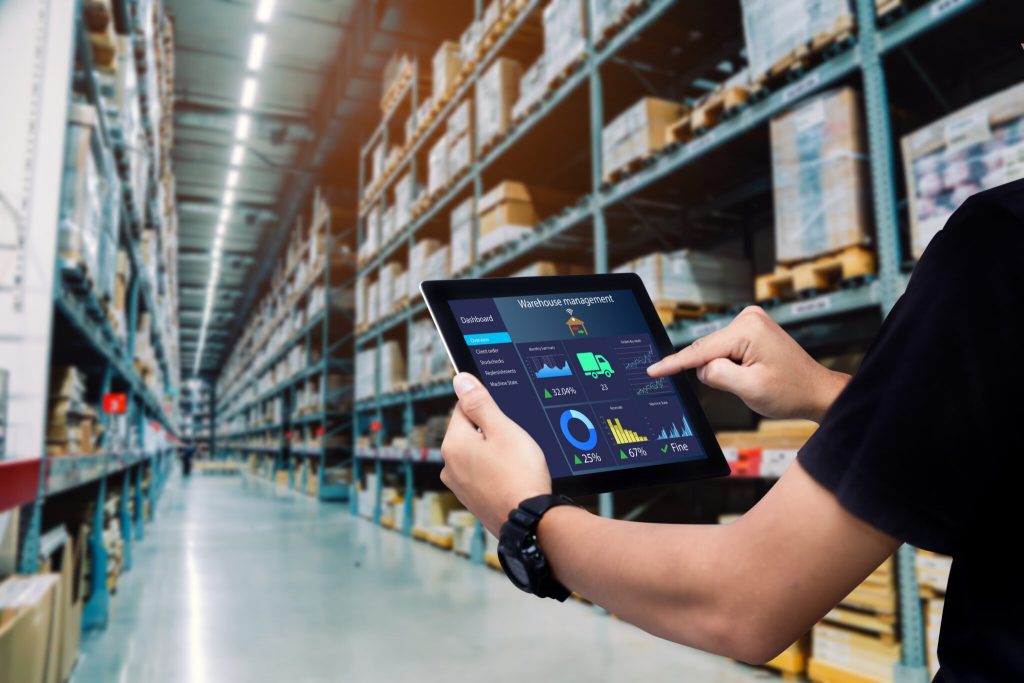
What Enterprise Retail Automation Actually Covers
Enterprise retail automation is often discussed as a single concept, but in practice it spans several distinct operational domains – each with its own maturity curve, technology requirements, and return-on-investment profile.
Planning and Demand Forecasting has been the most mature area for longest. Statistical forecasting engines have given way to machine learning models capable of incorporating unstructured data – weather, social sentiment, local events – alongside traditional sales history. The best implementations today do not just predict demand; they automatically trigger downstream actions in replenishment, allocation, and buying based on those predictions.
Merchandising and Pricing is where automation is accelerating fastest. Dynamic pricing – the ability to adjust prices in real time based on competitor activity, inventory levels, and demand signals – has moved from the domain of online-only retailers to mainstream brick-and-mortar operations. Automated markdown optimisation, promotion evaluation, and assortment rationalisation tools are reducing the manual workload on merchandising teams while improving sell-through and margin.
Supply Chain and Replenishment automation is being reshaped by the need for resilience as much as efficiency. Automated reorder triggers, supplier collaboration platforms, and AI-powered exception management tools are enabling retailers to run leaner inventory positions without sacrificing availability. The emphasis has shifted from simply automating the routine to using automation to identify and respond to disruption before it reaches the shelf.
Store Operations represents perhaps the largest remaining frontier. Task management automation, AI-assisted scheduling, automated inventory counting via RFID and computer vision, and autonomous checkout technologies are all moving from pilot to deployment at scale. The store is becoming a data-generating environment – and automation is what turns that data into operational action.
Customer Engagement is where automation is most visible to the consumer. AI agents that handle customer service interactions, automated personalisation of digital storefronts, and intelligent loyalty programme management are changing what customers experience from retailers – and what they expect.
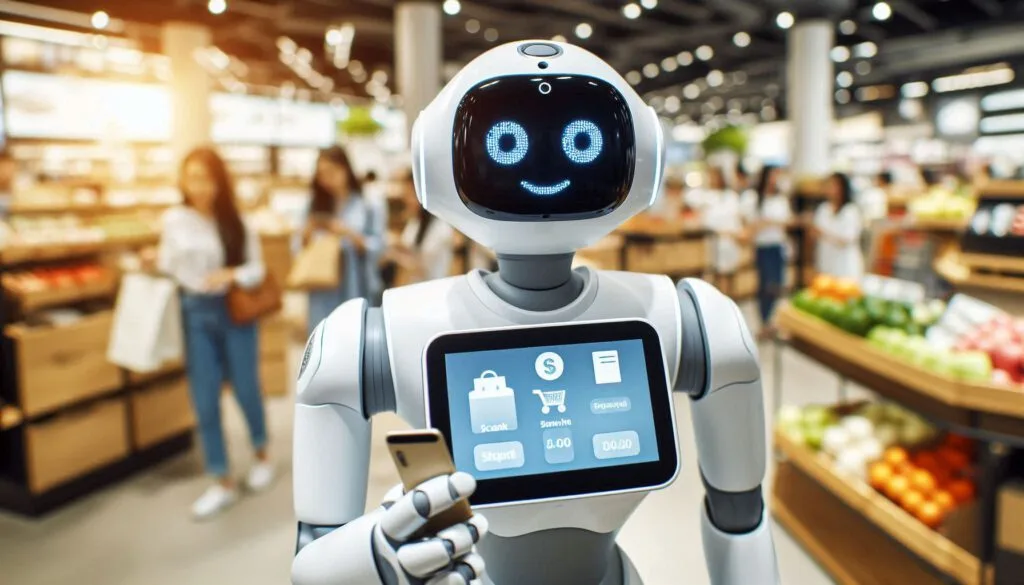
The Shift from Rule-Based to Intelligent Automation
For much of its history, retail automation meant encoding rules: if stock falls below X, trigger a replenishment order; if a product has not sold in Y days, apply a markdown. These systems are still essential, but they are being augmented – and in some cases replaced – by systems that learn and adapt rather than simply follow instructions.
The practical difference is significant. Rule-based systems require constant maintenance as business conditions change. They struggle with exceptions, tend to optimise locally rather than globally, and cannot incorporate the full complexity of modern retail environments. Intelligent automation – grounded in machine learning and, increasingly, large language models – can handle ambiguity, improve with experience, and make decisions that account for second-order effects across the business.
The emergence of agentic AI is accelerating this shift. Rather than generating a recommendation that a human must approve and act on, agentic systems can execute multi-step workflows autonomously: identifying a supply disruption, evaluating alternative suppliers, adjusting the replenishment plan, and communicating the change to store operations – without a human in the loop at every step. The practical deployments gaining traction in enterprise retail today include supplier negotiation assistants, autonomous category management agents, and customer service systems that handle everything from routine queries to complex order amendments.
For Oracle Retail users, this evolution has direct implications. The platform’s planning, merchandising, and supply chain modules are designed to support sophisticated decision logic – but realising that potential requires thoughtful configuration, integration, and increasingly, AI-layer extensions that sit above the core system and translate intelligence into action.
What this means for your business: Audit the automation logic currently embedded in your Oracle Retail environment. How much of it is rule-based, how well maintained are those rules, and where are the highest-value opportunities to introduce learning-based systems that can adapt rather than simply execute?
Integration Is the Defining Challenge
The technology for enterprise retail automation exists. What limits its impact in most large organisations is not the algorithm – it is the integration.
Automation can only be as good as the data it operates on. A demand forecasting model that cannot access real-time inventory positions, or a pricing engine that does not have visibility into competitor activity, will produce outputs that are theoretically sophisticated but practically unreliable. In enterprise retail environments, where data commonly sits across multiple legacy systems, regional ERPs, e-commerce platforms, and third-party feeds, achieving the data quality and connectivity that automation requires is often the hardest part of the project.
The integration challenge extends beyond data. Automation systems need to write back into operational systems – updating replenishment plans, triggering purchase orders, adjusting pricing in POS systems – and that requires robust, well-governed integration architecture. Retailers who invested in modernising their integration layers in previous years are now reaping the benefits: their automation initiatives deploy faster, run more reliably, and produce cleaner outcomes.
For Oracle Retail users, the integration ecosystem is well-established – but it requires active management. Oracle Integration Cloud (OIC) and the Retail Integration Bus (RIB) provide the infrastructure, but configuration, monitoring, and governance are ongoing disciplines. As automation initiatives expand, the volume and complexity of integration events increases; retailers who are not proactively managing their integration health will find it becoming a bottleneck.
What this means for your business: Before launching a new automation initiative, assess your integration architecture honestly. Are your Oracle Retail integrations current, well-monitored, and capable of handling increased throughput? Integration debt is often the hidden constraint that slows automation deployment and reduces its impact.

Automation and the Workforce: Getting the Balance Right
No serious discussion of enterprise retail automation can avoid the question of workforce impact. Automation eliminates certain categories of manual work – that is its purpose. But the relationship between automation and the retail workforce is more nuanced than displacement narratives suggest.
The most effective automation implementations in retail are not those that simply reduce headcount. They are those that redirect human capability toward higher-value work: the judgment calls that machines cannot reliably make, the supplier relationships that require negotiation and trust, the customer interactions that benefit from genuine human understanding. Category managers freed from manual data consolidation spend more time on strategy. Store associates not occupied with routine stock counting can focus on customer experience.
This rebalancing requires deliberate workforce strategy. Training, change management, and role redesign are not peripheral concerns – they are central to whether automation delivers its projected returns. Retailers who approach automation as purely a cost-reduction exercise tend to underinvest in this dimension and then wonder why adoption stalls or why the projected savings do not materialise.
The practical implication for enterprise retail is that automation programmes need executive sponsorship that goes beyond IT and finance. Operations, HR, and store leadership need to be engaged from the outset – not as recipients of a technology project, but as co-designers of new ways of working.
What this means for your business: Define the human role in your automation strategy as clearly as you define the technology role. Which decisions will automation own? Which will humans own? Which will be collaborative? Answering these questions before deployment – not after – is what separates automation programmes that deliver sustainable value from those that generate short-term savings and long-term friction.
Measuring the Return on Automation Investment
Enterprise retail automation projects are large, complex, and expensive. Boards and investors will expect measurable returns – and in many cases they will want to see them within a defined timeframe. This creates pressure to demonstrate value quickly, which can lead to an overemphasis on the most easily quantified metrics (typically labour cost reduction) at the expense of the most strategically important ones.
A more complete framework for measuring automation ROI in retail includes:
- Operational efficiency gains – reduction in manual processing time, error rates, and exception volumes. These are real and measurable, but they are the starting point, not the ceiling.
- Inventory and margin improvement – the downstream financial impact of better forecasting, smarter replenishment, and more disciplined markdown management. In most retail environments, inventory is the single largest working capital line; even modest improvements in availability and sell-through have material P&L impact.
- Revenue impact – the incremental sales generated by better in-stock positions, more relevant pricing, and improved personalisation. This is harder to isolate but often represents the largest component of automation’s financial benefit.
- Speed and agility – the reduction in time-to-decision across planning, buying, and operational cycles. In a market environment characterised by volatility, the ability to respond faster than competitors is a genuine source of advantage that does not always show up immediately in financial metrics but compounds over time.
- Risk reduction – the decrease in supply chain disruption impact, compliance exposure, and operational variability. Hard to quantify in advance, but consistently cited by retailers as among the most valued outcomes of well-implemented automation.
What this means for your business: Build an ROI framework before you begin, not after. Define which metrics matter most to your business, establish baselines, and agree on measurement methodology with your finance and operations teams. Automation projects without clear success criteria tend to drift – and make it difficult to build the internal confidence needed to invest in the next phase.

The Oracle Retail Automation Landscape
For retailers running Oracle Retail, automation is not a separate layer to be added – it is increasingly embedded in the platform itself, and extended through a growing ecosystem of AI-native tools and third-party integrations.
Oracle Retail Merchandising Cloud Service, the Retail Planning suite, and Oracle Retail Insights all have machine learning capabilities either built-in or accessible through configuration. The challenge for most retailers is not feature availability – it is activating those capabilities effectively within the context of their specific business processes, data landscape, and organisational readiness.
Beyond the core platform, the Oracle Retail Marketplace provides access to a growing range of certified extensions that extend automation capabilities in specific areas: advanced replenishment logic, AI-powered assortment optimisation, enhanced integration tooling, and more. Retailers who are not actively monitoring what is available in the marketplace risk building custom solutions for problems that are already solved.
At QBCS, our own extensions address specific automation challenges that we see repeatedly across enterprise retail clients – from AI-powered regression test automation that removes manual effort from quarterly patch cycles, to integration modernisation tools that enable the clean, reliable data flows that automation depends on. These are not theoretical capabilities; they are tools built in response to operational problems real retailers face.
What this means for your business: If you are running Oracle Retail, take stock of the automation capabilities you are already licensed for but may not be fully utilising. The gap between what is available on the platform and what most retailers have actually activated is often surprisingly large – and closing that gap is frequently the highest-ROI starting point for an enterprise automation programme.
Where to Start: A Practical Approach
For retailers at the beginning of their enterprise automation journey, the scale of the opportunity can itself be an obstacle. Everything seems important, priorities are contested, and the risk of investing in the wrong place is real.
Our recommendation, grounded in 20+ years of working with retailers across segments and geographies, is to start with the intersection of high business impact and high data readiness. These are not always the same areas.
High business impact areas – typically demand forecasting accuracy, in-stock availability, and markdown optimisation – tend to be well understood. The constraint is usually data quality and integration maturity. Before deploying a sophisticated AI model, the data it will run on needs to be clean, current, and comprehensive.
High data readiness areas – typically transaction processing, loyalty data, and supply chain event tracking in more mature Oracle Retail environments – provide the foundation for automation even where the business case for specific use cases is still being refined.
The intersection of these two dimensions – where business impact is clear and data is ready – is where early wins are most reliably achieved. Those wins build the internal credibility and organisational confidence needed to tackle the harder, higher-value automation challenges that follow.

Get In Touch
At QBCS, we help enterprise retailers turn automation from a strategic ambition into operational reality – from assessing your current Oracle Retail automation maturity through to implementing, extending, and supporting the solutions that deliver measurable business impact.
With over 20 years of Oracle Retail expertise and a dedicated AI and automation practice, we are well-placed to help your organisation navigate this landscape. If you would like to discuss how enterprise retail automation applies to your specific situation, get in touch with our team.