
Related Stories


Share this article
2026 Retail Trends: What Retailers Need to Know to Stay Ahead
The retail industry enters 2026 at an inflection point. After years of incremental digital transformation, the pace of change has dramatically accelerated – driven by artificial intelligence, shifting consumer expectations, volatile macroeconomics, and a fundamental rethinking of what retail is for. For retailers still working through transformation backlogs, this year’s agenda is both an opportunity and a pressure test.
At QBCS, we work with retailers across fashion, grocery, department stores, DIY, and more. What we’re seeing on the ground – and what the data confirms – points to several converging trends that will define which businesses thrive in 2026 and which fall behind. Here is our analysis.
Table of Contents
AI Moves from Experimentation to Execution
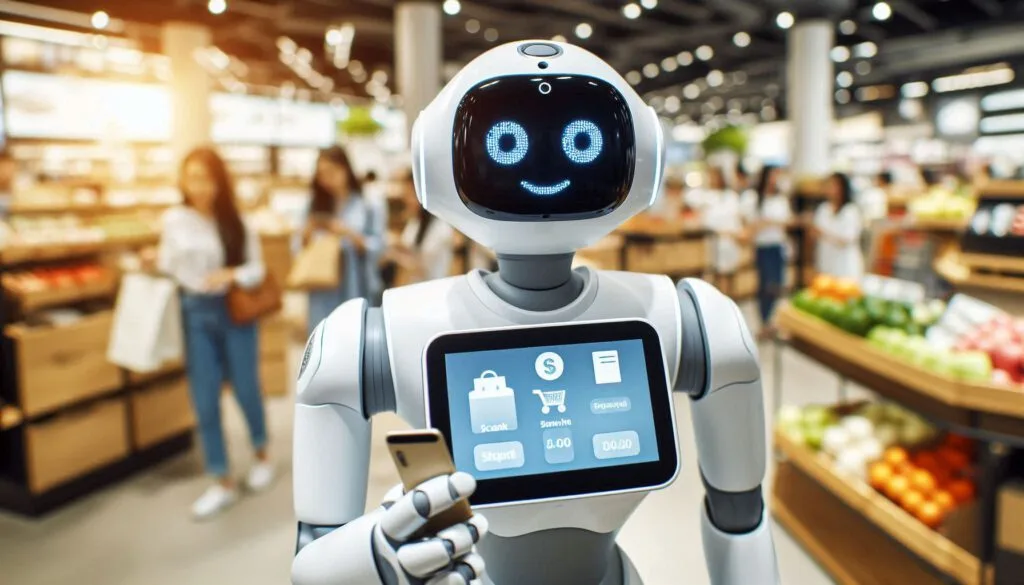
If 2024 was the year of AI pilots and 2025 was the year of proof-of-concept expansion, then 2026 is the year retailers are expected to show results. AI in commerce has made a decisive shift from experimentation to execution – and retailers who cannot demonstrate measurable ROI from their AI investments will face hard questions from boards and investors.
The most significant practical development is agentic AI – AI systems that do not simply recommend or predict, but actually act. Rather than waiting for a human to approve a decision, agentic tools can independently execute multi-step processes: reordering stock, responding to customer service requests, or adjusting pricing in real time. At NRF 2026, agentic use cases dominated the conversation, with use cases seen in customer service at Gap, where agents handle routine requests, and at 7-Eleven, where agents help with time-consuming documentation tasks.
For retailers using Oracle Retail, this shift has direct implications for how planning, merchandising, and supply chain tools are configured and extended. AI that integrates natively into existing platforms – rather than sitting alongside them as disconnected tools – is what delivers operational impact at scale. This is central to how QBCS approaches AI implementation: practical, explainable, and embedded in your existing technology stack.
What this means for your business: Review your current AI investments and ask whether they are genuinely integrated into day-to-day workflows or still operating as separate experiments. If the latter, 2026 is the year to close that gap.

The Rise of the Value-Seeking Consumer
Consumer behaviour in 2026 is not just responding to inflation – it has been fundamentally reshaped by it. Value-seeking consumers represent a lasting, foundational shift, not a temporary reaction to economic pressure. Households that tightened their belts through 2023 and 2024 have not loosened them in proportion to easing inflation. Frugality, trade-downs, and private label loyalty have become ingrained habits.
Bain expects US retail sales to grow 3.5% year over year in 2026 – a slight slowdown from 2025’s 4.0% – with volume growth modest and inflation expected to hover between 2.6% and 3.0%. European markets face additional headwinds, with France near flat and Germany showing only cautious recovery.
Critically, value in 2026 is not purely about price. Retailers who succeed are those returning to the essence of what defines their business – understanding and delivering perceived value from the customer’s point of view, with authenticity, trust, and customer experience as central components of their value proposition. Private label is an instructive example: Gen Z is projected to allocate 18.4% of their spending budget to private labels by mid-2026, surpassing all other generations – valuing packaging, trust, authenticity, and innovation in store brands, not just low price.
What this means for your business: Re-examine your value architecture. Where are you winning on perceived value – not just margin? Assortment, private label strategy, and pricing optimisation all need to speak to the customer who is shopping more carefully than ever.

Omnichannel Is No Longer Optional - It Is Table Stakes
The expectation that a customer can move seamlessly between app, website, and physical store is not new. What is new in 2026 is the consequence of getting it wrong. Omnichannel customers spend 1.5 times more each month compared to single-channel shoppers, and 75% of shoppers use a mix of online and physical channels – with journeys often involving three or more touchpoints per purchase.
The practical priorities this year are unified customer profiles, real-time inventory visibility, and seamless fulfilment options such as buy-online-pick-up-in-store (BOPIS). Alongside this, physical retail is seeing a quiet resurgence. Mall foot traffic in the first half of 2025 was up year over year, with indoor malls seeing a 1.8% increase in visits and visit durations rising 3.3% compared with the first half of 2024. Consumers are returning to physical retail – but they are coming for experience, not just transaction.
Inventory accuracy is the critical technology enabler here. Without real-time stock data flowing across channels, the omnichannel promise collapses at the last step.
What this means for your business: Assess your inventory data quality across channels. For Oracle Retail users, this is often where MFCS and OMS configuration work yields the highest return – ensuring the data that powers your omnichannel experience is accurate, timely, and actionable.
Hyper-Personalisation at Scale
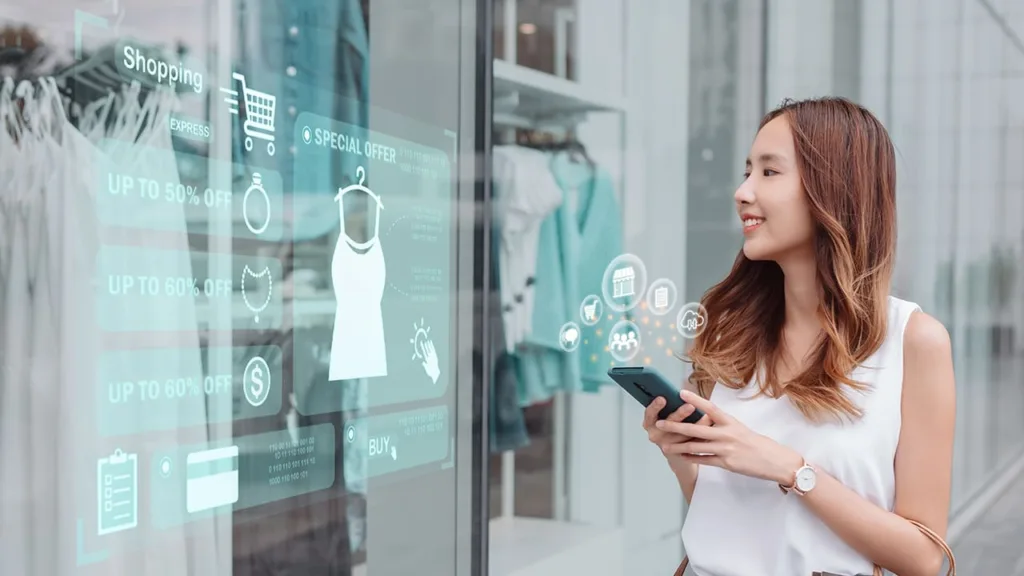
Personalisation is not a new concept in retail, but the version arriving in 2026 is categorically different from the recommendation engines of the past decade. Retailers are deploying micro strategies – offering real-time, generative-AI-powered individualisation of recommendations, pricing, and service. Predictive analytics anticipates shopper needs, automates stocking, and delivers experiences that change dynamically per customer.
The industry is moving decisively away from one-size-fits-all retailing, with advances in data analytics allowing retailers to dig deep into their own transaction data to uncover meaningful insights – evolving toward hyper-segmentation, tailoring assortments, pricing, and promotions to distinct customer segments, regions, and even individual stores. Loyalty programmes are evolving in parallel: the next generation of loyalty is about flexible rewards, exclusive access, and offers that reflect individual purchase history rather than broad demographic groupings.
For personalisation to work at scale, the data infrastructure underneath it must be robust. Retailers who have invested in clean, integrated data foundations – whether through Oracle Retail Insights, AI analytics platforms, or modernised integration layers – are the ones positioned to capitalise. Those running on fragmented, legacy systems will find it difficult to compete.
What this means for your business: Personalisation at scale is a data infrastructure problem as much as an AI problem. An honest assessment of your data quality, integration architecture, and planning processes is the right starting point.

Supply Chain Resilience in an Uncertain World
Supply chain has not been off the agenda since 2020, but the nature of the challenge has shifted. In 2026, the primary pressure is not pandemic-driven disruption – it is geopolitical volatility and tariff uncertainty. Retailers enter 2026 facing continued volatility driven by AI adoption, tariffs, and shifting consumer behavior, and will need to remain agile as they shape retail priorities for the year.
Deloitte identifies supply chain transformation as one of the five key dynamics shaping retail in 2026, with the emphasis firmly on building resilience amid ongoing unreliability. This means diversifying supplier bases, shortening lead times where possible, investing in demand forecasting accuracy, and building more agility into buying and replenishment cycles.
AI is having a measurable impact. Intelligent systems detect potential supply chain disruptions – ensuring high-demand products remain available while optimising sourcing locations to minimise shipping times and labour costs. Agile retail frameworks are gaining traction as a broader response, reducing the gap between insight and action from months to days.
What this means for your business: Review your demand forecasting accuracy and your ability to respond in-season. For Oracle Retail users, the Planning and Optimisation suite – when properly configured and maintained – is one of the most powerful tools available for this challenge.

Sustainability and Transparency Are Competitive Advantages
Sustainability has moved beyond corporate social responsibility into the core of retail strategy. Consumer demand for transparency is intensifying – particularly among Millennial and Gen Z shoppers – and regulatory pressure is adding urgency. Extended producer responsibility (EPR) laws in places like California and Europe have made the sustainability compliance challenge stricter and more complex.
The commercial opportunity is real. Over 150 top fashion brands now run their own recommerce platforms, giving clothes a second life and attracting customers who care about sustainability and value – representing 325% growth since 2021. This is not just good corporate citizenship; it is a revenue and loyalty strategy.
Connected packaging will increasingly incorporate AI tools not only to drive supply chain efficiencies, but also to track circularity, guide purchase decisions, and serve as a shopper portal to deeper marketing engagement.
What this means for your business: Sustainability data needs to be integrated into your operational systems, not managed separately in spreadsheets. Retailers who have this infrastructure in place will be better positioned to meet regulatory requirements and communicate authentically to consumers.

The Next Generation of Shoppers: Gen Z and Gen Alpha
No retail trend analysis in 2026 is complete without addressing the generational shift reshaping the customer base. Gen Z and Gen Alpha each demand that retailers prove their inclusivity and authenticity – and one slip-up means a brand could be in serious trouble. Immersive, in-person experiences capture attention, and traditional retail playbooks simply do not apply.
Their discovery journeys are nonlinear – spanning social platforms, AI-powered search, physical stores, and peer recommendations. Loyalty is contingent, not assumed. Consumers now have, on average, more than three points of influence in discovering new products and visit 68 retail banners in a given year.
Even niche social platforms including Discord, Reddit, Bluesky, and Substack are winning converts among these cohorts. Retailers need to be present where these consumers are – and consistent and authentic across every touchpoint.
What this means for your business: Invest in understanding your Gen Z and Gen Alpha customers specifically, not as a sub-segment of a broader demographic. Their behaviours, values, and expectations require targeted responses in assortment, pricing, marketing, and experience design.
Looking Ahead: What to Prioritise
Taken together, these trends point to a clear set of strategic priorities for retailers this year:
- Integrate AI into operations, not just analytics: The value of AI in 2026 comes from embedding it in decision-making workflows – planning, replenishment, pricing, customer service – not from dashboards that report on what already happened.
- Invest in data quality and integration infrastructure: Personalisation, omnichannel execution, and AI-driven insights all depend on clean, connected data. This is often unglamorous work, but it is the foundation everything else rests on.
- Return to fundamentals on value: In a consumer environment shaped by persistent value-consciousness, clarity about what you stand for and who you serve is more important than ever.
- Build supply chain agility: The ability to respond quickly to demand shifts and supply disruptions – not just to plan well – is a growing source of competitive advantage.
- Make sustainability operational: Move sustainability from a communications function to an operational one, with data and systems that can track and report on progress in real time.

Get In Touch
At QBCS, we help retailers turn these trends into concrete action – from strategy through to implementation and ongoing support. With over 20 years of Oracle Retail expertise and a solid in-house AI practice, we are well-positioned to help retailers navigate the complexity of 2026 and build the capabilities that will matter for the years ahead. If you would like to discuss how any of these trends apply to your business, we invite you to get in touch with our team.