
Related Stories

Share this article
The Future of Retail: Will AI Transform or Disrupt the Industry?
Important note: This article is not AI-generated content. All information is based on NRF2026 Retail expo experiences contributed by Zoltan Juhasz.
Background
In the last few years, most of the time and energy around AI has been invested in research and development. Multiple data centres have been built around the world, and insanely powerful computers with extraordinary computing capacity have been deployed to support fast-evolving LLM models and AI-based applications. Hundreds of LLM-based AI technologies have been developed to pave the way for future standards. As time passes, people are gaining more and more clarity on how AI technologies can play a significant role in business in the near future. One thing is clear now: the R&D phase of the AI journey has reached a point where the second most challenging phase must begin—the adoption phase. Why? Simply because it now needs to be proven that big ideas, financial investments, and all the hype around AI in recent years will actually deliver on their promises.
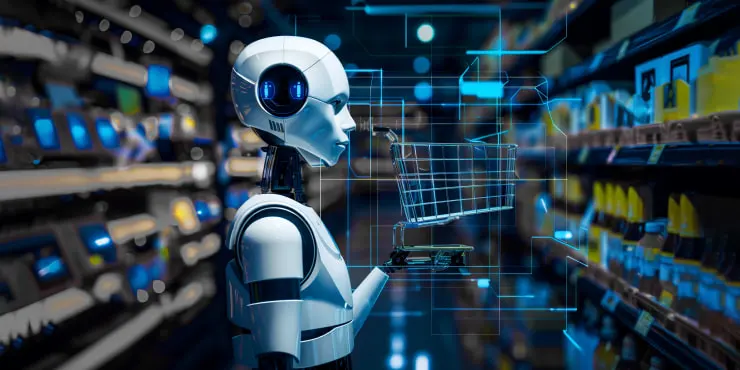
Retail Disruptions in the past: the rise of ecommerce
Those who followed the evolution of e-commerce and multi- and omnichannel retail probably remember the major crashes and huge successes that resulted from technology adoption.
From today’s perspective, at that time there was a clear path to follow. Get ready and adopt technology – networks, the internet, new sales channels – as quickly as your business could. Almost every retailer adopted similar business processes to reach and retain customers on a wider, even global, scale – in other words, to enter the new “blue ocean”. The rise of eCommerce clearly disrupted brick and mortar retailers, put manufacturers and product brands in the direct reach of consumers. Retailers had to compete with their own suppliers and product brand owners for the same customers.
AI is not a disruptor
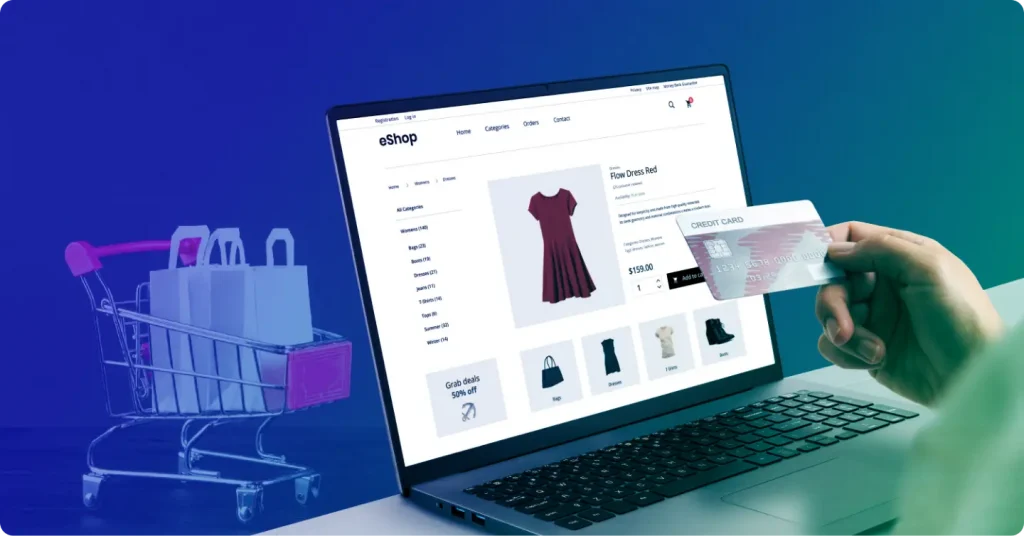
AI technology and its adoption is a different story than the rise of ecommerce. It can generate significant value across many areas of a retail business, but AI itself will not create an immediate “blue ocean” like e-commerce did or lead to short-term disruption. It is fundamentally different. There will not suddenly be more customers who were previously unreachable. AI will not shorten the supply chain simply by using AI agents. AI will not reinvent automated warehouses – they already exist. AI will not change the current player landscape of retail: customers, retailers, logistics and manufacturers all remain in the same role as before.
AI’s impact on retail
First and foremost, AI will become a tool for retailers to achieve higher efficiency in processes, reduce operational costs, and, most importantly, transform the way people work in the future of retail.
We moved from paper and pen to Excel, then to databases, and later to specific network-based applications to perform tasks. Writing reports, analysing outcomes, uploading data, balancing inventory – these are all tasks.
Retailers spend most of their time performing tasks and less time focusing on business weaknesses and solutions. This is normal, because at the end of the day, sales and loyalty are what matter most. This is probably one of the reasons why retail, in general, has been slow to adopt new technologies. “As long as sales deliver the numbers, there is nothing urgent to change.“
Keep in mind that AI will change customer behaviour rapidly. Fifteen years ago, only a few of us believed we would ever buy clothes, shoes, or perfume online. Today, we are talking about AI shopping agents that can shop on behalf of customers, considering many factors such as delivery time, price, value, and personal preferences. Is your retail business ready for these challenges? Will that AI agent find your business? You probably know your customers, will you still know them in the future?

Adoption of AI
AI adoption can happen in different ways. Organizations can deploy complete AI-based solutions out of the box, or they can adopt AI step by step to address specific needs. We believe there are no bad choices; it depends on the business and the organization.
We believe the most important factors are awareness, timing, and dedication.
NRF 2026 has given a very strong indication that AI is ready to be incorporated into retail businesses.
Instead of just talking about agentic AI, AI in the supply chain, AI in planning, AI in workforce management, and so on, there is an even more important question to ask:
- Will AI adoption cause disruptive changes in the retail business? Is it a transformation, or something that could ruin entire companies while elevating others?
What can retailers do
At QBCS, we strongly believe that now is the right time to start adopting AI technologies in every retail business. AI is highly transformative, unlocks remarkable efficiency opportunities, and helps retailers prepare for future customer expectations.
We do not have a crystal ball to predict the future, but we do have 25 years of experience in retail technology and have been at the forefront of impactful technology advancement, including AI. Our teams have been researching, prototyping and implementing AI technology in Retail for the last 18 months. The lessons we have learned can give retailers immediate advantage in lowering cost, increasing performance and efficiency.
Our message for retailers is clear:
Do the right things early- so when it matters most, you are already one step ahead. Retail is under immense cost pressure. AI can help with that.
Contact us today and learn how we helped our retailer clients save millions leveraging AI